She heard her daughter crying on the phone. It was a scam.
A mother spent five and a half hours believing her daughter had been kidnapped. Here's how virtual kidnapping scams work, and what your family can set up now.
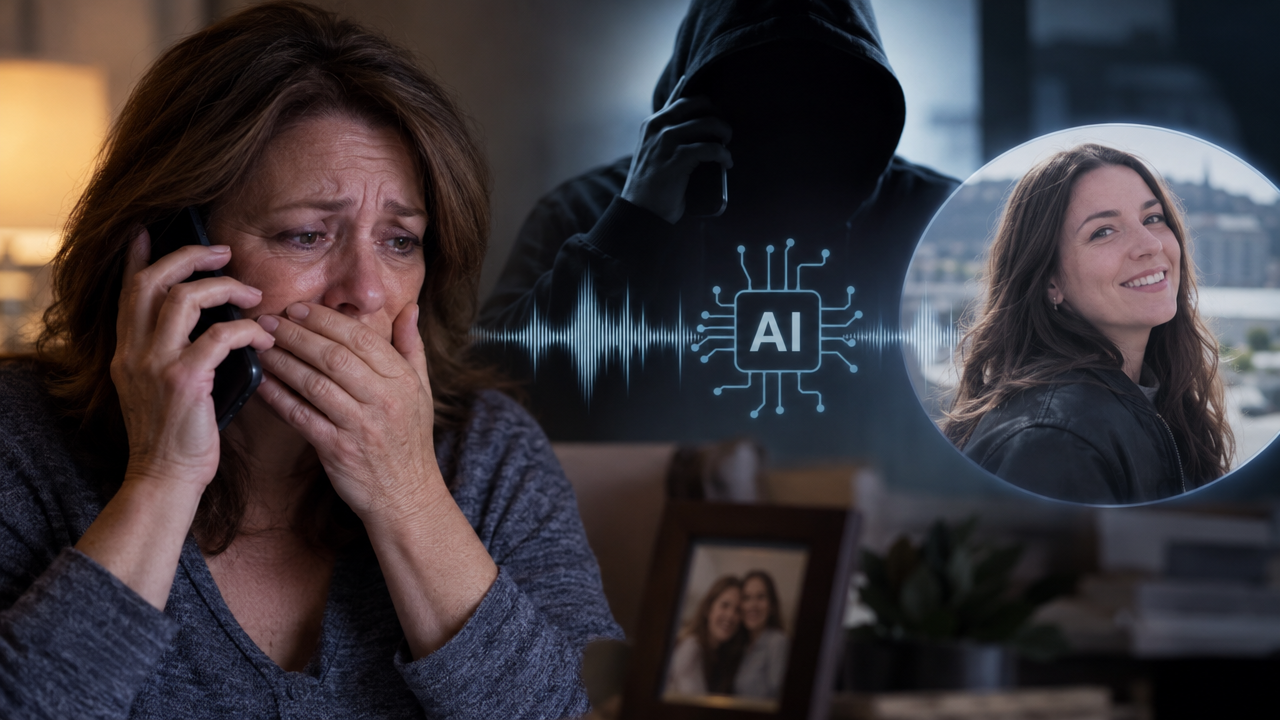
A California mother recently shared how she spent five and a half hours believing criminals had taken her adult daughter. She heard what sounded exactly like her daughter crying on the phone. Her daughter was safe at work the entire time.
If you've ever thought you would see through a call like this, her story is worth reading. Not because she missed something obvious, but because the call was built so that almost anyone would have done what she did.
What happened
Deborah Del Mastro, a Navy veteran, told her story in a Fox News interview published October 7, 2026. She says she was having breakfast with her husband when a call came from a number with her local area code. The man on the line claimed a drug cartel had taken her 37-year-old daughter, Sarah. Then she heard someone who sounded like Sarah, crying and struggling to breathe.
The caller demanded US$20,000. Deborah told him she didn't have it. Over the next several hours, he made her keep the line open, sent her and her husband from place to place to send money, told her people were watching, and gave her a cover story to use if anyone asked why she was sending it. When she muted the call to talk privately with her husband, he noticed and started screaming.
In total, she sent US$5,400 in four transfers through MoneyGram and Western Union, which she says was all the money she and her husband could reach. The caller finally said Sarah had been released outside a store where they were waiting. Sarah wasn't there. When Deborah called her daughter herself, Sarah answered from work. The family then reported what happened to their local police.
Was it really an AI voice clone?
Deborah and her daughter believe the voice was cloned with AI. That hasn't been confirmed. What we do know is that the technology exists. The US Federal Trade Commission has warned that a scammer may only need a short clip of someone's voice, which could come from content posted online, and a voice-cloning program to sound just like that person on a call.
The scam itself is much older than the technology. It's often called "virtual kidnapping": someone claims to have taken a person you love when no kidnapping has happened at all. In December 2025, the FBI warned that criminals are also sending altered photos or videos of the "kidnapped" person as fake proof of life, sometimes through disappearing messages so you have less time to look closely.
As Deborah put it to Fox News: "It is an old scam with new technology."
Why this works on careful people
Look at what the caller did. He used a voice she trusted, at its most frightened. He kept the line open so she couldn't quietly check anything. He told her she was being watched. He gave her a story to tell anyone who might have stopped her. Every step was designed to keep her from the one thing that would have ended the scam in seconds: a call to her daughter.
Deborah describes herself as someone who runs toward a crisis, not away from it. Being calm and capable didn't protect her, because the scam wasn't aimed at what she knew. It was aimed at how much she loves her child. If this has happened to you, that's what happened to you too.
Set this up with your family now
The best time to plan for this call is before it ever comes. A few minutes together can give everyone a way out.
- Agree on a code word. Pick a word or phrase only your family knows, and never post it anywhere. The FBI recommends this for virtual kidnapping scams.
- Don't rely on the code word alone. Deborah has said she couldn't have used one, because the caller controlled when she could speak to "Sarah." Agree on a second way to check too, like calling another family member, a partner, or a friend who would know where that person is.
- Make "we verify first" a family rule. Agree that nobody sends emergency money until someone has reached the person directly, on a number already saved in their phone.
- Say it out loud. Tell the people you love that a familiar voice can be faked. Deborah has said she didn't know this was possible until it happened to her.
If a call like this comes in
- If you believe someone is in immediate danger, call your local emergency number. Real emergencies happen, and police can help check.
- Try to reach your loved one directly. The FTC advises calling a number you know is theirs, and if you can't reach them, trying another family member or their friends. If someone is with you, they can do this on a different phone while you stay on the line.
- Notice the pressure. Threats, secrecy, and "don't hang up or tell anyone" are tactics, not proof. The FBI says scammers create a false sense of urgency and encourages you to stop and ask whether the caller's claims actually make sense.
- Watch how they want to be paid. The FTC says requests to wire money, send cryptocurrency, or buy gift cards can be signs of a scam, because those payments are hard to get back.
- Keep what you can. The FBI suggests taking a screenshot or recording of any "proof of life" photos. Note the phone numbers, times, and payment details too.
If you already sent money
You didn't do anything shameful. You responded the way a loving person responds when they hear someone they love in danger.
- Contact the bank or money transfer service you used as soon as you can, and ask whether the payment can be stopped or recalled.
- Report it to your local police and your country's fraud reporting service. Include as much as you can: phone numbers, receipts, messages, and any photos or recordings.
- Give yourself time. According to Fox News, Deborah later told a US Senate committee that months afterward she was still deeply traumatized. If you're still shaken, that isn't an overreaction.
- Find support where you live. Our Get help page can point you to reporting and support options in your country.
It happened to them too
First-hand accounts of this exact scam.